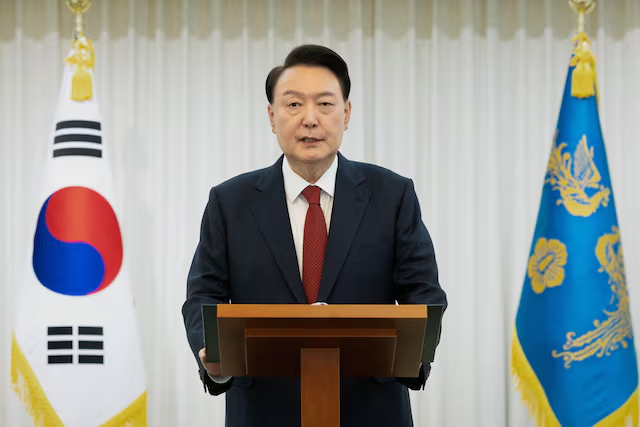
Former South Korean President Yoon Suk Yeol has been found guilty of leading an insurrection over his failed attempt to impose martial law in December 2024, marking one of the most consequential political rulings in the country’s modern history. The Seoul Central District Court sentenced Yoon to life imprisonment, concluding that he unlawfully used his presidential authority in an effort to undermine South Korea’s constitutional order. Prosecutors had sought the death penalty, but the court instead imposed a life sentence, citing mitigating factors while emphasizing the seriousness of the offense.
The case centered on Yoon’s brief declaration of martial law, during which military and police forces were deployed around the National Assembly as lawmakers moved to overturn the order. The decree lasted only a few hours before legislators voted to revoke it, triggering a political crisis that ultimately led to Yoon’s impeachment and removal from office. During the trial, prosecutors argued that the former president orchestrated an unconstitutional attempt to retain power, while Yoon maintained that his actions were intended as a warning over political deadlock rather than an effort to seize control.
The verdict has been widely viewed as a defining moment for South Korea’s democracy and judicial system, reinforcing the principle that even the nation’s highest office is subject to the rule of law. Several former senior officials were also convicted for their roles in the martial law episode, underscoring the broad scope of the investigation. Although Yoon is expected to continue appealing the ruling, the historic conviction closes a dramatic chapter in South Korean politics while leaving a lasting impact on the country’s democratic institutions.